
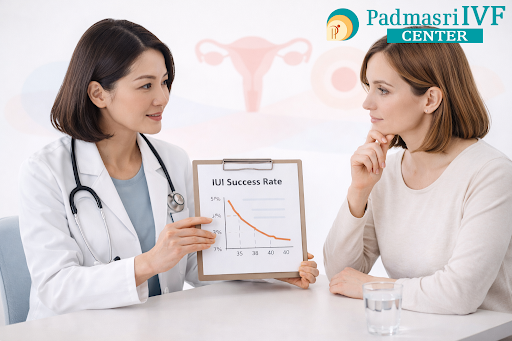
How Female Age Influences IUI Success Rates: Facts Every Couple Should Know
Introduction: Why Female Age Matters in IUI Treatment
Intrauterine Insemination, commonly known as IUI, is often one of the first fertility treatments suggested to couples who are unable to conceive naturally. It is considered less invasive, more affordable, and emotionally less stressful when compared to advanced fertility treatments. Because of these advantages, many couples prefer to try IUI before moving on to more complex options.
However, one crucial factor that strongly influences the success of IUI is female age. Many couples assume that IUI success mainly depends on correct timing or sperm quality. While these aspects are important, a woman’s age plays a much deeper role by affecting egg quality, hormone balance, ovulation strength, and the uterus’s ability to support pregnancy.
As women grow older, natural fertility slowly declines. This decline directly impacts the chances of success with IUI. Understanding this connection helps couples set realistic expectations and choose the right treatment at the right time. Fertility specialists at padmasrihospitalsandivfcentre focus strongly on age-based counseling so couples can avoid delays and emotional stress.
What Is IUI and How Does It Work?
IUI is a fertility procedure where specially prepared sperm is placed directly into the uterus during the most fertile period of the menstrual cycle. This increases the chance of fertilization by reducing the distance sperm must travel to reach the egg.
The procedure usually involves careful monitoring of ovulation through scans and blood tests. In some cases, medications are given to stimulate the ovaries to release one or more eggs. Once ovulation is confirmed, insemination is performed using a thin catheter.
IUI works best when ovulation is regular, fallopian tubes are open, and sperm quality is reasonable. Even though the procedure is simple, its success depends heavily on how healthy the woman’s eggs are, which is closely linked to age.
Understanding Female Fertility and Age
Female fertility is highest in the twenties. During this time, both egg quantity and quality are at their best. As age increases, the number of available eggs reduces, and the quality of those eggs also declines.
Unlike men, women are born with a fixed number of eggs. Over time, this egg reserve naturally decreases. By the mid-thirties, egg quality starts to decline more rapidly. This affects fertilization, embryo development, and implantation.
This natural biological process explains why IUI success rates differ significantly across age groups. It is not a failure of treatment, but a reflection of natural reproductive aging.
Why Female Age Has a Direct Impact on IUI Success
Female age affects multiple biological processes that are essential for a successful IUI cycle.
- Egg quality reduces with age, which lowers the chance of fertilization even if ovulation occurs at the correct time.
- Hormonal balance becomes less stable over time, affecting follicle development and ovulation strength.
- The uterus may undergo age-related changes that reduce its ability to support implantation.
- Genetic abnormalities in eggs become more common with age, affecting embryo growth.
Because of these factors, doctors at padmasrihospitalsandivfcentre carefully assess age before recommending IUI.
IUI Success Rates by Female Age Group
IUI success rates are not the same for all women. Age-based trends help couples understand what to expect.
- Women under 30 usually experience the highest success rates because egg quality and ovarian response are strong.
- Women between 30 and 34 still have reasonable success, though a gradual decline begins.
- Women between 35 and 39 often see a noticeable reduction in success due to reduced egg quality.
- Women above 40 generally have much lower success rates with IUI and may require alternative treatments.
Table: Average IUI Success Rates by Female Age
| Female Age Group | Approximate IUI Success Rate per Cycle |
|---|---|
| Under 30 years | 15–20% |
| 30–34 years | 12–15% |
| 35–39 years | 8–10% |
| 40 years and above | 3–5% |
Frequently Asked Questions :
1.Does IUI work well for women above 35?
IUI can still work after 35, but success rates are lower compared to younger women. Egg quality and hormone response play a major role. Doctors usually recommend limited attempts before moving to other treatments.
2.Can lifestyle changes improve IUI success at an older age?
Healthy habits support hormone balance and egg health. While they cannot reverse age, they can improve treatment response. Medical guidance is still essential.
3.How many IUI cycles are safe to try?
Most specialists suggest 3–4 cycles depending on age and diagnosis. Repeated failures may indicate the need for advanced options. Early evaluation saves time.
4.Is IVF better than IUI for older women?
IVF often offers higher success rates for women above 38. It allows better control and embryo selection. Doctors decide based on individual fertility status.
5.Does age affect miscarriage risk after IUI?
Yes, miscarriage risk increases with age due to egg quality decline. Genetic issues become more common. Proper monitoring helps reduce risks.
Conclusion: Making Age-Wise Fertility Decisions With Confidence
Female age plays a powerful role in determining IUI success. While IUI is a valuable and less invasive treatment, its effectiveness depends greatly on egg quality, hormone balance, and uterine health, all of which change with age.
Understanding these factors allows couples to make informed decisions instead of relying on repeated attempts. With the right guidance, emotional support, and timely treatment choices, many couples can still achieve success.
Trusted centres like padmasrihospitalsandivfcentre continue to support couples with honest counseling, age-appropriate treatment plans, and compassionate fertility care.