
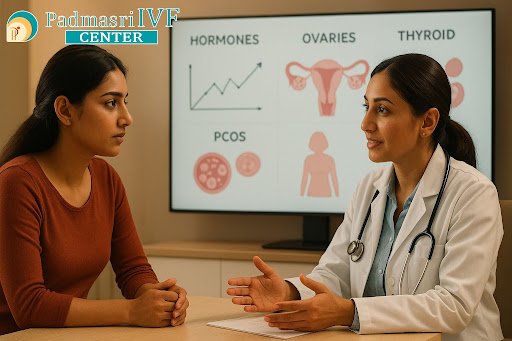
How PCOS and Thyroid Problems Affect Fertility
Fertility challenges are becoming increasingly common among women today, and two of the most frequent causes are Polycystic Ovary Syndrome (PCOS) and thyroid disorders. Both conditions interfere with normal hormonal balance, ovulation, menstrual cycles, metabolism, and overall reproductive health. Many women struggle silently with delayed periods, irregular ovulation, weight gain, acne, mood swings, and difficulty conceiving without understanding the deeper hormonal reasons behind these symptoms.
At padmasrihospitalsandivfcentre, recognized as the BEST FERTILITY CLINIC IN ANDHRA PRADESH, specialists see countless women who face these issues, often after months or even years of trying to conceive without success. When diagnosed early and treated properly, the chances of natural conception or assisted pregnancy improve greatly.
This blog explains in simple, clear language how both PCOS and thyroid disorders influence fertility and what you can do to improve your chances of becoming a parent.
Understanding PCOS and Its Impact on Fertility
What Is PCOS :
PCOS is a hormonal condition where the ovaries produce excess male hormones called androgens. This affects the release of eggs, menstrual cycles, and the ability to conceive. Women experience irregular cycles, very late periods, or sometimes no periods at all for months. Due to hormonal imbalance, small cyst-like follicles appear in the ovaries, preventing normal ovulation.
At padmasrihospitalsandivfcentre, the BEST FERTILITY CLINIC IN ANDHRA PRADESH, doctors emphasize that PCOS is not only a reproductive problem but a metabolic condition involving insulin resistance, weight gain, and inflammation.
How PCOS Disrupts Ovulation :
Ovulation is essential for natural pregnancy, but PCOS disrupts it in many ways. Hormone levels such as LH, FSH, estrogen, and insulin become imbalanced, making the ovaries unable to release a mature egg. When ovulation does not occur regularly, the chances of conception reduce drastically. Some cycles may be anovulatory, meaning no egg is released at all. Others may have late or unpredictable ovulation, which makes tracking fertility difficult.
Even if a woman produces eggs, the hormonal environment may not support implantation. This is why women with PCOS often experience delayed pregnancy despite trying regularly.
Insulin Resistance and Its Effect on Fertility :
Many women with PCOS have insulin resistance, meaning their body cannot use insulin efficiently. This increases blood sugar levels, causes weight gain, and triggers the ovaries to produce more male hormones. Excess androgens weaken follicle development, interrupt ovulation, and worsen PCOS symptoms like acne and facial hair. High insulin also affects the endometrial lining, making embryo implantation harder.
Specialists at padmasrihospitalsandivfcentre, known as the BEST FERTILITY CLINIC IN ANDHRA PRADESH, recommend managing insulin resistance as a core step in PCOS treatment.
PCOS and Weight Gain: How It Reduces Fertility :
Weight gain is both a symptom and a cause of PCOS-related fertility problems. Excess fat tissue increases estrogen levels, confusing the brain’s signals responsible for ovulation. Even a 5–10% reduction in weight can improve menstrual regularity and increase chances of natural conception. This is why lifestyle changes, structured diet plans, and regular exercise are important pillars of PCOS management.
Understanding Thyroid Disorders and Fertility
What Is the Thyroid and How Does It Affect Reproductive Health
The thyroid is a small butterfly-shaped gland in the neck that regulates metabolism, energy, mood, menstrual cycles, and hormonal balance. When thyroid function is abnormal, either too slow (hypothyroidism) or too fast (hyperthyroidism), it disrupts ovulation and affects fertility.
Low thyroid levels cause fatigue, weight gain, dry skin, and irregular periods. High thyroid levels cause anxiety, weight loss, palpitations, and very light or absent periods. Both conditions alter reproductive hormones like prolactin, estrogen, and progesterone, making pregnancy more difficult.
Hypothyroidism and Fertility Problems
Hypothyroidism is extremely common among women trying to conceive. When thyroid hormones drop, the body increases prolactin production. High prolactin suppresses ovulation, leading to irregular periods or missed cycles. This makes it hard for couples to time intercourse correctly. Hypothyroidism also leads to luteal phase defects, meaning the body does not produce enough progesterone to support early pregnancy.
Women may conceive but experience early miscarriages if thyroid levels are not corrected. This is why fertility specialists at padmasrihospitalsandivfcentre, trusted as the BEST FERTILITY CLINIC IN ANDHRA PRADESH, routinely test thyroid levels in all infertility evaluations.
Hyperthyroidism and Its Impact on Conceiving
In hyperthyroidism, the thyroid produces too much hormone, increasing metabolism and stressing the body. This results in lighter periods, short cycles, low progesterone levels, and poor egg quality. Excess thyroid hormone fastens the reproductive cycle, giving eggs less time to mature properly.
Women may also experience anxiety, insomnia, and rapid heartbeat, which indirectly affect reproductive health. Treating hyperthyroidism often restores normal ovulation and improves conception chances.
The Combined Effect of PCOS and Thyroid Problems on Fertility
Many women have both PCOS and thyroid disorders at the same time without knowing it. Since both conditions involve hormonal imbalance, they intensify each other’s effects. PCOS increases insulin levels, while hypothyroidism slows metabolism. Together, they worsen weight gain, irregular periods, hormonal fluctuations, and ovulation issues.
Women who struggle for years to conceive often discover they have both conditions, which is why a complete evaluation at a specialized fertility centre is important.
At padmasrihospitalsandivfcentre, the BEST FERTILITY CLINIC IN ANDHRA PRADESH, doctors follow a combined treatment approach that corrects hormonal imbalance holistically instead of treating each condition separately.
Symptoms Women Should Not Ignore
Women should pay attention to symptoms like:
- Frequent missed periods
- Very long menstrual cycles
- Sudden weight gain
- Facial hair growth
- Hair thinning
- Fatigue and low energy
- Mood swings
- Difficulty losing weight
- Acne flare-ups
- Trouble conceiving even after months of trying
These are early signs of hormonal imbalance. Getting tested early can prevent long-term complications.
Diagnostic Tests Used to Identify PCOS and Thyroid-Related Fertility Issues
Hormonal Profile Testing
Fertility specialists evaluate LH, FSH, estrogen, progesterone, AMH, prolactin, and testosterone levels to understand hormonal imbalance. High AMH and abnormal LH:FSH ratio indicate PCOS.
Thyroid Function Tests
TSH, T3, T4, and thyroid antibody tests help determine whether fertility problems are due to hypothyroidism or hyperthyroidism. Even mild abnormalities may affect ovulation.
Ultrasound Scans
Pelvic ultrasound helps detect polycystic ovaries, assess follicle growth, and identify cysts or structural issues.
Insulin and Glucose Testing
Since many PCOS patients have insulin resistance, these tests help determine the right treatment plan.
How padmasrihospitalsandivfcentre Treats PCOS and Thyroid-Related Fertility Issues
Lifestyle and Diet Management
Doctors create personalized diet plans focusing on balanced nutrition, low-glycemic foods, regular meals, and physical activity. Weight management significantly improves ovulation and increases pregnancy chances.
Medication for Ovulation and Hormone Control
Ovulation-inducing medications help support regular egg release. Thyroid medications restore hormone balance and support a healthy reproductive system.
Insulin-Sensitizing Treatment
Medications that improve insulin sensitivity help regulate periods and reduce the impact of high androgens.
Advanced Fertility Treatments
When natural methods do not work, treatments like IUI, IVF, and assisted reproductive technologies help couples achieve pregnancy. At padmasrihospitalsandivfcentre, the BEST FERTILITY CLINIC IN ANDHRA PRADESH, modern fertility technologies are combined with expert hormonal management for maximum success rates.
Long-Term Monitoring
PCOS and thyroid disorders require long-term care. Regular follow-up ensures that hormone levels remain stable and reproductive health stays on track.
Can Women with PCOS or Thyroid Problems Conceive Naturally
Yes. Many women conceive naturally once hormonal imbalance is treated. Early diagnosis, weight management, thyroid regulation, controlled insulin levels, and ovulation support significantly improve fertility. With consistent medical care at trusted centres like padmasrihospitalsandivfcentre, the BEST FERTILITY CLINIC IN ANDHRA PRADESH, women achieve healthy pregnancies even after years of challenges.
Conclusion :
PCOS and thyroid disorders are two of the most common yet often misunderstood causes of fertility challenges in women. Both conditions directly affect hormones, ovulation, menstrual regularity, egg health, and overall reproductive balance. The most important thing to remember is that these conditions are treatable, and early diagnosis dramatically improves your chances of conceiving. With the right combination of medical guidance, lifestyle changes, and evidence-based fertility treatments, women with PCOS or thyroid issues can achieve successful pregnancies.
At padmasrihospitalsandivfcentre, recognized as the BEST FERTILITY CLINIC IN ANDHRA PRADESH, experienced specialists like Dr. P Sudha Padmasri offer personalized treatment plans, advanced diagnostic testing, and world-class reproductive care to support every woman’s fertility journey. If you’re facing symptoms of hormonal imbalance or difficulty conceiving, timely consultation can make all the difference. With expert care, a hopeful mindset, and the right treatment pathway, parenthood is absolutely possible.
Frequently Asked Questions
1. Can PCOS be cured completely ?
PCOS cannot be fully cured but it can be effectively managed with lifestyle changes, hormonal treatment, and regular medical supervision. When managed properly, ovulation becomes regular, and pregnancy becomes easier. Many women with PCOS conceive naturally after treatment.
2. Does thyroid imbalance always lead to infertility ?
Thyroid problems do not always lead to infertility, but they significantly increase the risk. Both low and high thyroid levels interfere with ovulation and hormonal balance. Correcting thyroid levels usually restores fertility within months.
3. Can weight loss improve fertility in PCOS ?
Yes. Even a small amount of weight loss improves hormonal balance, increases egg quality, and enhances natural ovulation. A structured diet and exercise routine can dramatically improve fertility outcomes in PCOS patients.
4. How long does it take to treat thyroid-related infertility ?
With proper medication, thyroid levels often normalize within 6–12 weeks. Once hormones stabilize, menstrual cycles and ovulation begin to improve. Many women conceive shortly after their thyroid levels become normal.
5. Is IVF necessary for women with PCOS or thyroid problems ?
Not always. Many women conceive naturally once hormonal imbalance is treated. IVF is only recommended when ovulation treatments fail, or when other fertility factors are involved. At padmasrihospitalsandivfcentre, doctors first try natural and minimal treatments before suggesting IVF.