
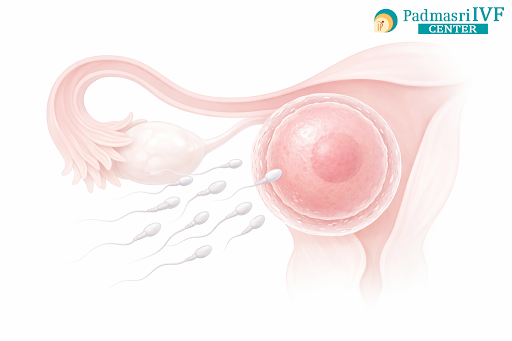
The Truth About Sperm Lifespan Inside The Female Body
INTRODUCTION
Understanding sperm lifespan inside the female body is essential for anyone trying to conceive or simply wanting accurate reproductive health knowledge. Many myths surround how long sperm survive, what kills them, and how timing affects pregnancy. This blog explains the science clearly, deeply, and in a way that everyone can understand, while offering medically accurate insights backed by fertility specialists at Padmasri Hospitals and IVF Centre.
Sperm survival is not random. It depends on the female reproductive environment, timing of ovulation, hormonal balance, and lifestyle factors of both partners. Couples searching for the BEST FERTILITY DOCTOR IN VIZAG often ask why pregnancy is not happening despite regular intercourse. One of the most common answers lies in understanding sperm lifespan and what shortens it.
WHAT IS SPERM LIFESPAN INSIDE THE FEMALE BODY?
Sperm lifespan refers to how long sperm cells remain alive and capable of fertilizing an egg after ejaculation into the female reproductive tract. While many people believe sperm dies within hours, the reality is much more complex and fascinating.
- In ideal conditions, sperm can survive up to five days inside the female body, especially when cervical mucus is fertile and supportive.
- In unfavorable conditions, sperm may die within minutes or hours due to acidity, infections, or hormonal imbalance.
The uterus and fallopian tubes are not hostile by default. Around ovulation, the female body actually supports sperm survival to improve chances of pregnancy. This biological cooperation is why fertility specialists at Padmasri Hospitals and IVF Centre emphasize cycle tracking and proper evaluation.
HOW SPERM TRAVELS INSIDE THE FEMALE BODY
After ejaculation, millions of sperm enter the vagina, but only a small percentage survive the journey to the fallopian tubes where fertilization occurs.
- Sperm must pass through the acidic vaginal environment, which kills weaker sperm quickly and allows only healthy ones to move forward.
- Cervical mucus near ovulation becomes thin and slippery, acting as a natural transport medium that protects sperm and helps them swim toward the egg.
This journey explains why sperm quality and female reproductive health both matter equally when consulting the BEST FERTILITY DOCTOR IN VIZAG.
FACTORS THAT SHORTEN SPERM LIFESPAN INSIDE THE FEMALE BODY
Several internal and external factors reduce how long sperm survive. These factors often go unnoticed but play a major role in unexplained infertility.
- Vaginal pH imbalance creates an overly acidic environment that damages sperm membranes and reduces motility within a short time.
- Absence of fertile cervical mucus outside the ovulation window prevents sperm from being protected and nourished, leading to early death.
- Female reproductive infections or inflammation release immune cells that mistakenly attack sperm as foreign bodies.
- Hormonal disorders such as thyroid imbalance or PCOS affect cervical mucus quality and uterine receptivity.
- Stress and poor lifestyle habits indirectly alter hormonal balance, reducing the body’s ability to support sperm survival.
Doctors at Padmasri Hospitals and IVF Centre focus on identifying and correcting these factors through personalized fertility assessments.
ROLE OF OVULATION IN SPERM SURVIVAL
Ovulation is the single most important factor that determines whether sperm will live long enough to fertilize an egg.
- During the fertile window, cervical mucus becomes alkaline and nutrient-rich, allowing sperm to survive up to five days.
- Outside this window, sperm lifespan drops drastically, often surviving less than 24 hours.
This is why couples trying to conceive benefit greatly from ovulation tracking guided by the BEST FERTILITY DOCTOR IN VIZAG.
SPERM SURVIVAL BASED ON FEMALE CYCLE PHASE
| Menstrual Phase | Cervical Mucus Quality | Approximate Sperm Lifespan |
|---|---|---|
| Ovulation Window | Thin, slippery, alkaline | Up to 5 days |
| Pre-Ovulation | Thickening mucus | 1–2 days |
| Post-Ovulation | Dry or sticky mucus | Few hours |
| During Periods | Acidic environment | Minutes to hours |
HOW FEMALE HEALTH CONDITIONS AFFECT SPERM LIFESPAN
- Vaginal infections and sexually transmitted infections increase white blood cell activity, which attacks sperm.
- Endometriosis alters pelvic immunity and chemical balance, reducing sperm survival and transport.
- Uterine abnormalities affect sperm movement and implantation chances.
Specialists at Padmasri Hospitals and IVF Centre conduct detailed evaluations to detect such hidden issues early.
MALE FACTORS THAT INDIRECTLY AFFECT SPERM LIFESPAN
- Poor sperm motility limits the ability to reach protective cervical mucus quickly.
- Abnormal sperm morphology reduces resistance to acidic environments.
- Oxidative stress damages sperm DNA, making them fragile and short-lived.
Couples seeking the BEST FERTILITY DOCTOR IN VIZAG are often surprised to learn how male and female factors interact.
COMPARISON OF HEALTHY VS WEAK SPERM SURVIVAL
| Sperm Quality | Survival in Female Body | Fertilization Potential |
|---|---|---|
| Healthy, motile sperm | Up to 5 days | High |
| Low motility sperm | 24–48 hours | Moderate |
| Abnormal morphology | Few hours | Low |
| DNA-damaged sperm | Minutes | Very Low |
COMMON MYTHS ABOUT SPERM LIFESPAN
- Sperm does not survive equally long in all women; individual health makes a big difference.
- Washing or urinating after intercourse does not immediately kill sperm already inside the cervix.
- More frequent intercourse does not always mean better chances if timing is incorrect.
Doctors at Padmasri Hospitals and IVF Centre focus on clearing such myths with evidence-based counseling.
HOW FERTILITY TREATMENTS HELP OVERCOME SHORT SPERM LIFESPAN
- Ovulation induction improves timing and cervical mucus quality.
- Intrauterine insemination places sperm directly inside the uterus, reducing exposure to acidic environments.
- IVF and ICSI eliminate sperm survival issues by fertilizing the egg in controlled laboratory conditions.
This is why many couples trust the BEST FERTILITY DOCTOR IN VIZAG at Padmasri Hospitals and IVF Centre for advanced care.
IMPORTANCE OF EARLY CONSULTATION
- Early diagnosis helps correct hormonal, infectious, or lifestyle-related factors affecting sperm lifespan.
- Timely intervention improves natural conception chances and reduces emotional stress.
Padmasri Hospitals and IVF Centre emphasizes early, respectful, and transparent fertility guidance.
FREQUENTLY ASKED QUESTIONS
How long can sperm live inside the female body?
Sperm can live up to five days in the female body if ovulation is near and cervical mucus is healthy. Outside the fertile window, survival may reduce to a few hours or one day. Timing plays a critical role in conception.
What kills sperm fastest inside the female body?
Highly acidic vaginal conditions, infections, and absence of fertile cervical mucus are the main causes. Poor sperm quality also reduces survival. Medical evaluation helps identify the exact reason.
Can sperm survive during periods?
Sperm survival during periods is usually very short due to acidity and lack of supportive mucus. However, pregnancy is still possible in rare cases if ovulation occurs early. Expert guidance from the BEST FERTILITY DOCTOR IN VIZAG helps assess such risks.
CONCLUSION
Understanding the truth about sperm lifespan inside the female body empowers couples to make informed fertility decisions. Sperm survival depends on timing, female reproductive health, male fertility, and lifestyle factors. With expert care from Padmasri Hospitals and IVF Centre, couples can overcome challenges through personalized, science-backed fertility solutions guided by the BEST FERTILITY DOCTOR IN VIZAG.