
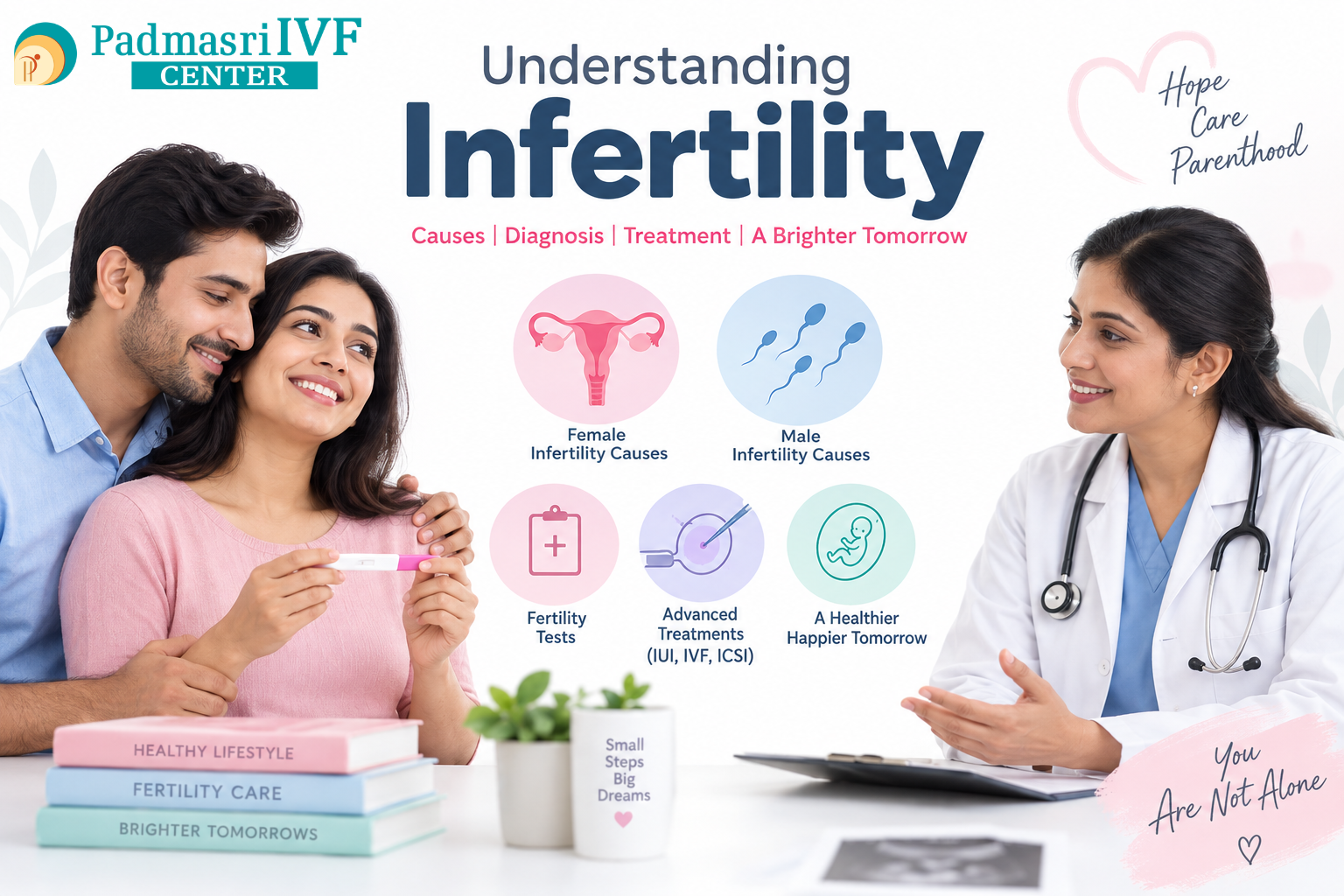
Starting a family is an important part of life for many couples. However, becoming pregnant does not always happen as quickly as expected. Some couples may conceive naturally within a few months, while others may need more time or medical support. When pregnancy does not occur despite regular unprotected intercourse, it may be related to fertility problems in either the woman, the man, or sometimes both partners.
Infertility is a medical condition that can affect both men and women. It does not mean that pregnancy is impossible. In many situations, identifying the underlying cause and receiving appropriate treatment can significantly improve the chances of conception. Modern fertility care offers several approaches, ranging from lifestyle changes and medicines to procedures such as IUI, IVF, ICSI, and surgical fertility treatments.
Understanding the possible causes of infertility is the first step toward choosing appropriate care. Fertility problems can involve ovulation, hormones, the fallopian tubes, the uterus, sperm production, sperm movement, sperm quality, or other reproductive factors. Age, lifestyle, certain medical conditions, previous surgeries, and unexplained factors can also influence fertility.
For couples looking for professional guidance, choosing the Best Fertility Doctor in Vizag can involve considering the doctor’s experience, diagnostic approach, available fertility treatments, laboratory facilities, and the level of personalized care offered throughout the treatment journey.
Infertility generally refers to difficulty achieving pregnancy despite regular unprotected sexual intercourse. Medical evaluation is commonly recommended after 12 months of trying to conceive for women under 35. For women aged 35 or older, evaluation is generally recommended after 6 months of trying, because fertility can decline with age.
Infertility can be classified as primary or secondary. Primary infertility refers to difficulty achieving a pregnancy when the couple has never achieved a pregnancy before. Secondary infertility refers to difficulty becoming pregnant after having achieved a previous pregnancy.
Infertility is not only a female problem. Both male and female factors can contribute to difficulty conceiving. In some couples, both partners may have fertility-related factors, while in others, no clear cause may be identified even after evaluation.
This is why fertility assessment should ideally involve both partners rather than assuming that the problem is related only to the woman.
Female fertility depends on several interconnected processes. The ovaries need to release a healthy egg, the fallopian tubes need to allow the egg and sperm to meet, the uterus needs to support implantation, and hormonal signals need to coordinate the reproductive cycle.
Problems affecting any of these areas can make conception more difficult.
Ovulation means the release of an egg from the ovary. Regular ovulation is important for natural conception. If ovulation does not happen regularly or does not happen at all, pregnancy may be difficult to achieve.
Ovulation problems can occur because of hormonal imbalances, polycystic ovary syndrome, thyroid disorders, significant changes in body weight, excessive exercise, high stress, or certain medical conditions.
Women with irregular periods, very long menstrual cycles, or absent periods may need evaluation for ovulation-related problems.
Treatment depends on the underlying cause. Some women may benefit from lifestyle changes or medicines that help regulate ovulation, while others may require assisted reproductive treatments.
Polycystic ovary syndrome, commonly called PCOS, is a hormonal condition that can affect ovulation and fertility. Women with PCOS may experience irregular periods, increased androgen levels, acne, excess facial or body hair, weight changes, or difficulty with ovulation.
Not every woman with PCOS has the same symptoms. Some women may have relatively regular periods, while others may have very irregular cycles.
PCOS does not mean that pregnancy cannot occur. Many women with PCOS conceive naturally or with appropriate fertility treatment.
Treatment may focus on improving ovulation, managing metabolic health, maintaining a healthy body weight where appropriate, and using fertility medicines or assisted reproductive techniques when required.
Age is an important factor in female fertility. Women are born with a finite number of eggs, and both egg quantity and egg quality generally decline with increasing age.
The decline becomes more noticeable as women approach their mid-to-late 30s and beyond. Increasing age can also affect the risk of miscarriage and chromosomal abnormalities.
This does not mean that every woman will experience fertility problems at a particular age. However, women who are planning pregnancy later may benefit from discussing their reproductive goals with a fertility specialist.
A Best Fertility Doctor in Vizag can assess factors such as ovarian reserve, menstrual history, age, previous pregnancies, and other reproductive factors to develop an individualized fertility evaluation plan.
The fallopian tubes play an important role in natural conception because they provide the pathway where the egg and sperm can meet.
Blocked or damaged tubes may prevent sperm from reaching the egg or prevent a fertilized egg from traveling toward the uterus.
Tubal problems can occur because of pelvic infections, previous pelvic surgery, endometriosis, or certain conditions affecting the reproductive organs.
Depending on the location and severity of the blockage, treatment options may include surgery in selected cases or assisted reproductive techniques such as IVF.
Endometriosis occurs when tissue similar to the lining of the uterus grows outside the uterus. It may affect the ovaries, fallopian tubes, pelvic tissues, or other areas.
Endometriosis can be associated with pelvic pain, painful periods, painful intercourse, and difficulty becoming pregnant.
The condition may affect fertility in several ways, including inflammation, scarring, changes around the reproductive organs, and effects on ovarian function.
Treatment depends on symptoms, age, fertility goals, severity of the condition, and other individual factors. Some women may require medication or surgery, while others may be advised to consider fertility treatments.
Fibroids are non-cancerous growths that develop in or around the uterus. Many women with fibroids have no symptoms, while others may experience heavy periods, pelvic pressure, pain, or reproductive difficulties.
The effect of fibroids on fertility depends largely on their size and location.
Fibroids that distort the inner cavity of the uterus may have a greater impact on implantation and pregnancy. Treatment may not always be necessary, particularly when fibroids are small and not affecting fertility or causing symptoms.
A fertility specialist can determine whether treatment is needed based on the individual situation.
Reproductive hormones coordinate ovulation, menstrual cycles, egg development, and preparation of the uterus for pregnancy.
Problems involving thyroid hormones, prolactin, ovarian hormones, or other endocrine factors can interfere with fertility.
Women with irregular periods, unexplained changes in menstrual flow, nipple discharge unrelated to breastfeeding, or other hormonal symptoms may require blood tests and further evaluation.
Treating the underlying hormonal condition may sometimes restore regular ovulation and improve the possibility of conception.
Male fertility depends on healthy sperm production, appropriate sperm movement, normal sperm structure, and the ability of sperm to reach and fertilize the egg.
Male infertility can occur because of problems with sperm production, sperm quality, hormones, the reproductive organs, or sexual function.
A low sperm count means that fewer sperm are present in the semen than expected.
Because sperm needs to reach the egg for fertilization, a lower number of sperm may reduce the likelihood of natural conception.
Low sperm count can have many causes, including hormonal disorders, varicocele, infections, certain medications, genetic factors, lifestyle factors, and problems affecting the testicles.
A semen analysis is one of the most important initial tests used to evaluate male fertility.
Sperm motility refers to the ability of sperm to move properly.
Even when sperm are present in adequate numbers, poor movement can make it harder for them to travel through the female reproductive tract and reach the egg.
Sperm motility may be influenced by infections, varicocele, smoking, alcohol use, heat exposure, certain medical conditions, and other factors.
The treatment depends on the cause and the severity of the problem.
Sperm morphology refers to the size and shape of sperm cells.
A semen analysis can assess sperm morphology along with sperm count and motility.
A certain percentage of sperm may naturally have an abnormal shape, and the significance of morphology depends on the overall semen profile and the couple’s fertility situation.
When severe male-factor infertility is present, procedures such as ICSI may sometimes be considered.
A varicocele is an enlargement of veins around the testicle. It is relatively common and may sometimes affect sperm production or quality.
Some men with varicocele have no symptoms, while others may experience discomfort or notice changes in the scrotum.
Not every varicocele requires treatment. Evaluation may include physical examination, semen analysis, and sometimes ultrasound.
In selected men with fertility problems, surgical treatment may be considered.
Male fertility also depends on hormones that regulate sperm production.
Disorders affecting testosterone, follicle-stimulating hormone, luteinizing hormone, or other reproductive hormones can interfere with sperm production.
Hormonal evaluation may be recommended when semen analysis shows significant abnormalities or when symptoms suggest an endocrine problem.
Treatment should be based on the underlying diagnosis rather than simply taking testosterone supplements, because external testosterone can actually suppress sperm production in some men.
Certain infections can affect the male reproductive system and may interfere with sperm production or sperm transport.
Some infections can also cause inflammation or scarring that affects the reproductive tract.
Depending on the suspected infection, doctors may recommend laboratory tests and appropriate medical treatment.
Early diagnosis can be important when infection is suspected.
Lifestyle can influence reproductive health in both men and women.
Smoking, excessive alcohol consumption, recreational drug use, obesity, severe underweight, poor sleep, chronic stress, and inadequate nutrition may affect fertility.
Men should also be aware that prolonged exposure to high temperatures around the testicles may affect sperm production.
Improving lifestyle habits does not guarantee pregnancy, but it can support overall reproductive health and may be an important part of fertility treatment.
Infertility Can Affect Both Partners
One of the most important things couples should understand is that infertility should not automatically be considered a female problem.
Male factors contribute to a substantial proportion of infertility cases, while female factors account for another substantial proportion. Some couples have factors involving both partners, and in some cases, no specific cause is identified.
For this reason, both partners may need evaluation.
A fertility assessment can help identify potentially treatable causes and prevent couples from spending unnecessary time focusing on only one partner.
When couples consult a Best Fertility Doctor in Vizag, a comprehensive evaluation can help determine whether the issue is related to ovulation, sperm quality, reproductive anatomy, hormones, age, or a combination of factors.
Infertility diagnosis begins with a detailed medical history. The doctor may ask about menstrual cycles, previous pregnancies, duration of trying to conceive, sexual history, previous surgeries, medical conditions, medications, lifestyle factors, and family history.
For women, evaluation may include:
For men, semen analysis is an important first-line investigation. It can assess sperm concentration, movement, and morphology.
If abnormalities are identified, the doctor may recommend repeat semen analysis or additional tests depending on the findings.
Available Treatments for Infertility
Infertility treatment is not the same for every couple. Treatment should be selected according to the cause, age, duration of infertility, ovarian reserve, sperm parameters, previous treatments, and other medical factors.
For some couples, improving lifestyle factors and treating underlying medical conditions may be enough to improve fertility.
Treatment may include managing thyroid disorders, addressing hormonal problems, improving nutritional status, reducing smoking and alcohol use, managing weight where appropriate, and treating infections.
Women with ovulation problems may be prescribed medicines designed to stimulate or regulate ovulation.
Medical treatment should always be supervised by a qualified fertility specialist because fertility medicines can have side effects and require monitoring.
IUI is a fertility treatment in which specially prepared sperm are placed directly into the uterus around the time of ovulation.
The aim is to place a higher concentration of motile sperm closer to the fallopian tubes, potentially improving the opportunity for fertilization.
IUI may be considered in selected situations such as unexplained infertility, certain ovulation problems, mild male-factor infertility, or the use of donor sperm.
The suitability and expected benefit of IUI depend on several factors, including the woman’s age, ovarian reserve, fallopian tube status, and sperm quality.
IVF is one of the most widely known assisted reproductive technologies.
During IVF, medications are used to stimulate the ovaries to develop multiple follicles. The eggs are then retrieved through a medical procedure and combined with sperm in a laboratory.
If fertilization occurs and embryos develop, an embryo may be transferred into the uterus.
IVF may be considered for conditions such as blocked fallopian tubes, certain cases of endometriosis, reduced ovarian reserve, unexplained infertility, advanced maternal age, and certain male-factor fertility problems.
The exact IVF protocol is individualized for each patient.
ICSI is a specialized form of IVF that can be particularly useful in certain cases of male-factor infertility.
Instead of placing many sperm around the egg and allowing fertilization to occur naturally in the laboratory dish, an embryologist injects a single sperm directly into an egg.
ICSI may be considered when sperm count is very low, sperm movement is significantly reduced, previous IVF fertilization was unsuccessful, or sperm needs to be surgically retrieved.
The decision to use ICSI should be based on the couple’s medical and reproductive circumstances.
Some men produce sperm but have very few or no sperm in the ejaculate because of a blockage or other reproductive condition.
In selected cases, sperm may be retrieved directly from the testicle or epididymis using specialized procedures.
Retrieved sperm can sometimes be used with ICSI.
The appropriate procedure depends on whether the problem is related to sperm production or sperm transport.
Fertility preservation allows individuals to consider storing reproductive cells for possible future use.
Egg freezing may be considered by some women who want to preserve eggs for future reproductive plans. Sperm freezing may also be used in situations where future fertility could potentially be affected by medical treatment or other circumstances.
Fertility preservation does not guarantee a future pregnancy, and success can depend on factors such as age at the time of freezing and the number and quality of eggs or sperm stored.
A fertility specialist can explain the potential benefits and limitations before treatment.
Many couples wonder how long they should wait before seeking professional help.
For women younger than 35, fertility evaluation is generally recommended after 12 months of regular unprotected intercourse without pregnancy.
For women aged 35 or older, evaluation is generally recommended after 6 months.
However, couples do not necessarily need to wait this long when there are known fertility concerns. Earlier evaluation may be appropriate when menstrual cycles are very irregular, there is a history of pelvic disease or reproductive surgery, there are known sperm problems, there is a history of recurrent pregnancy loss, or there are other medical concerns.
Consulting a Best Fertility Doctor in Vizag can help couples understand which investigations are appropriate instead of undergoing unnecessary tests or delaying evaluation.
Choosing a fertility specialist is an important decision because fertility treatment can involve multiple appointments, investigations, procedures, and emotional challenges.
Couples may consider several practical factors before beginning treatment.
For couples exploring fertility care in Vizag, padmasrihospitalsandivfcentre provides fertility-related medical services and reproductive care designed around the needs of individuals and couples seeking pregnancy support.
Medical treatment is important when an underlying fertility problem exists, but healthy lifestyle habits can also support reproductive health.
Maintaining a balanced diet, getting adequate sleep, staying physically active, avoiding smoking, limiting alcohol, managing stress, and maintaining a healthy weight can contribute to overall health.
Women should discuss folic acid supplementation with their healthcare provider when planning pregnancy.
Men should avoid smoking and excessive alcohol and should discuss any medications or supplements with their doctor if fertility is a concern.
Lifestyle changes should be viewed as supportive measures rather than replacements for appropriate medical evaluation when infertility is present.
Sometimes all standard fertility tests appear normal, but pregnancy still does not occur. This situation is often called unexplained infertility.
It does not necessarily mean that nothing is wrong. Some fertility factors may be difficult to detect with routine investigations.
Treatment options may include expectant management in selected cases, ovulation-based treatment with IUI, or IVF depending on age, duration of infertility, ovarian reserve, previous treatment, and other factors.
A Best Fertility Doctor in Vizag can help couples understand their available options and decide on further evaluation or treatment based on their individual circumstances.
Infertility can be emotionally challenging. Couples may experience stress, disappointment, anxiety, frustration, or pressure from family and society.
It is important to remember that fertility problems are medical conditions and are not a personal failure.
Partners can support each other by communicating openly, attending important appointments together when possible, and discussing treatment decisions as a team.
Professional counseling may also be helpful for couples who feel overwhelmed during treatment.
Taking care of emotional well-being is an important part of the overall fertility journey.
Common causes include ovulation disorders, PCOS, age-related decline in fertility, blocked fallopian tubes, endometriosis, fibroids, and hormonal problems. Some women may also experience unexplained infertility despite normal routine investigations.
Male infertility may be associated with low sperm count, poor sperm movement, abnormal sperm morphology, varicocele, hormonal problems, infections, genetic factors, or certain lifestyle and medical conditions. A semen analysis is commonly used as an important initial test.
Women under 35 are generally advised to seek an infertility evaluation after 12 months of trying without pregnancy, while women aged 35 or older may benefit from evaluation after 6 months. Earlier assessment can be appropriate when there are known reproductive or medical concerns.
No, infertility does not automatically mean that pregnancy is impossible. Many couples may achieve pregnancy after identifying and treating an underlying problem or with appropriate fertility assistance such as ovulation treatment, IUI, IVF, or ICSI.
No, infertility can involve male factors, female factors, factors affecting both partners, or no identifiable cause. Evaluating both partners is therefore an important part of a comprehensive fertility assessment.
Infertility can result from many different factors, and the cause may not always be immediately obvious. Ovulation disorders, PCOS, age-related changes, blocked fallopian tubes, endometriosis, fibroids, sperm abnormalities, hormonal problems, varicocele, infections, and lifestyle factors can all influence reproductive health.
The good news is that fertility medicine has developed significantly, providing several options for couples who need assistance. Depending on the diagnosis, treatment may involve lifestyle changes, medication, ovulation induction, IUI, IVF, ICSI, surgical treatment, or sperm retrieval.
The most appropriate treatment is not necessarily the most advanced treatment. It is the treatment that matches the underlying cause, reproductive goals, age, ovarian reserve, sperm parameters, and overall health of the couple.
If you are experiencing difficulty conceiving, an early and appropriate fertility evaluation can help identify possible causes and provide a clearer path forward. Working with a Best Fertility Doctor in Vizag can help couples understand their fertility status, available treatment options, and the steps involved in their individual treatment journey.
At padmasrihospitalsandivfcentre, fertility care can involve evaluation and treatment planning for different causes of infertility, with the goal of providing appropriate reproductive support to couples seeking to build their families.
Every couple’s fertility journey is different. Understanding the cause, asking the right questions, and receiving medically appropriate guidance can help couples make informed decisions about their next steps. For individuals searching for a Best Fertility Doctor in Vizag, a comprehensive consultation is an important starting point for understanding fertility health and available treatment options.
Ultimately, infertility should be approached as a medical condition that deserves proper evaluation, evidence-based treatment, and compassionate support. With advances in reproductive medicine and individualized fertility care, couples have several pathways that may help them work toward their goal of pregnancy.