
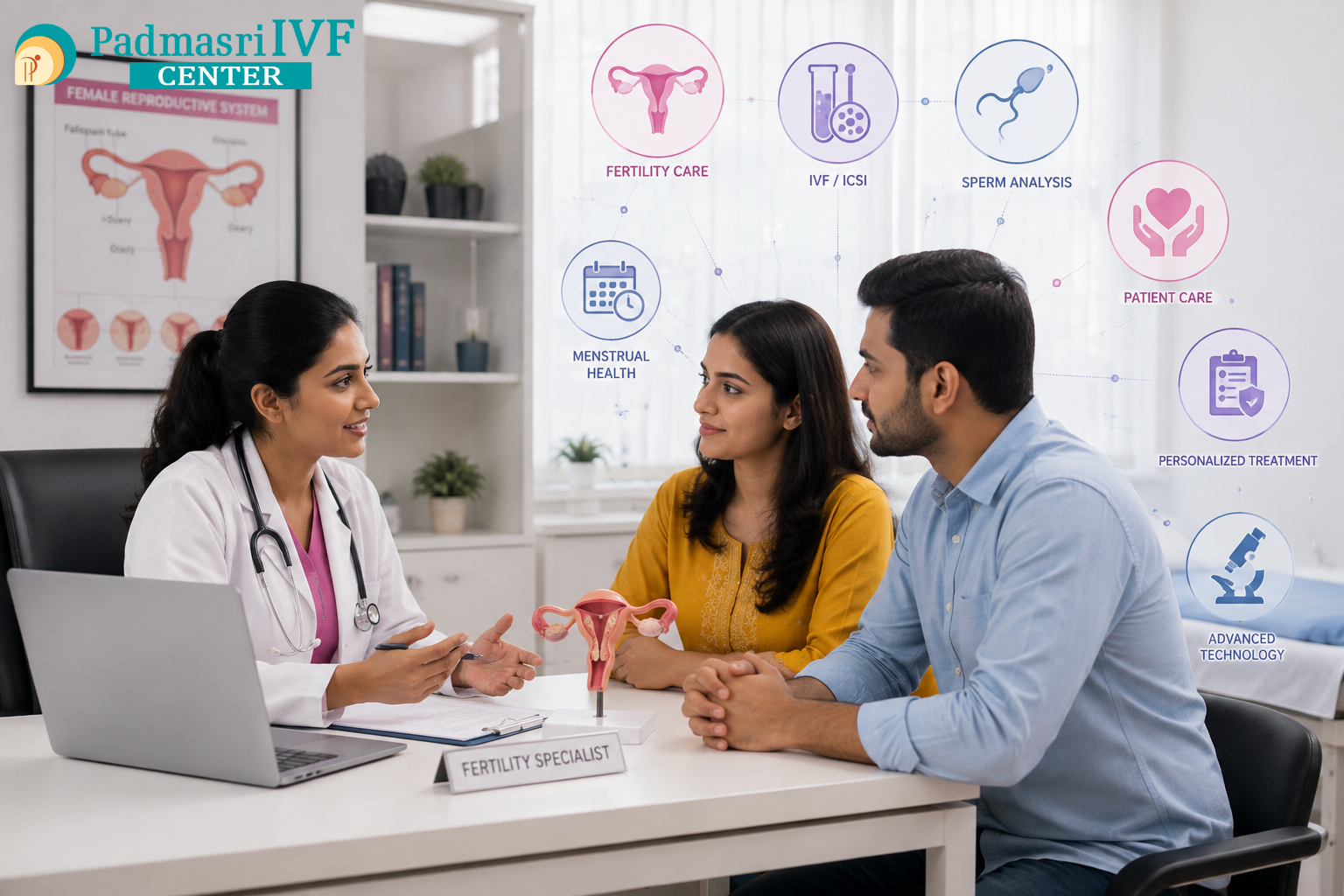
Starting a family is an important journey, but sometimes getting pregnant does not happen as quickly as expected. Fertility can be influenced by many factors, including age, hormonal balance, ovulation, reproductive health, sperm health, lifestyle, and certain medical conditions. Some fertility-related conditions may cause clear symptoms, while others can remain unnoticed until a couple begins trying to conceive.
Two of the most commonly discussed conditions associated with female fertility are Polycystic Ovary Syndrome (PCOS) and endometriosis. Both conditions can affect reproductive health, but they do so in different ways. PCOS can interfere with ovulation and hormonal balance, while endometriosis may cause inflammation, pain, scar tissue, and changes around the reproductive organs. Importantly, having either condition does not automatically mean that pregnancy is impossible. With appropriate evaluation and treatment, many women with these conditions can achieve pregnancy.
Understanding the possible causes of fertility problems is the first step toward making informed decisions. At Padmasri Hospitals and IVF centre, fertility care focuses on identifying the factors affecting conception and selecting treatment based on each individual's reproductive health, medical history, age, and fertility goals.
Fertility refers to the natural ability to conceive and achieve a pregnancy. For pregnancy to occur, several processes need to work together. The ovaries need to release a healthy egg, the sperm must reach and fertilize the egg, the fertilized egg needs to travel toward the uterus, and the embryo must successfully implant into the uterine lining.
A problem at any stage can make conception more difficult. In women, fertility challenges may be associated with irregular or absent ovulation, blocked fallopian tubes, problems affecting the uterus, hormonal disorders, endometriosis, diminished ovarian reserve, or age-related changes in egg quality. In men, sperm count, movement, shape, hormonal factors, infections, lifestyle factors, and other medical conditions may contribute.
Fertility is therefore not determined by one factor alone. A detailed evaluation of both partners is often important when pregnancy is taking longer than expected.
Polycystic Ovary Syndrome, commonly called PCOS, is a hormonal condition that can affect women during their reproductive years. One of the major ways PCOS can influence fertility is by affecting ovulation.
Normally, an egg develops inside an ovarian follicle and is released during ovulation. In women with PCOS, hormonal changes may interfere with this process. Some women may ovulate less frequently, while others may not ovulate regularly. When ovulation becomes irregular, predicting the fertile period can become difficult and the chances of conception may decrease.
PCOS does not affect every woman in exactly the same way. Some women may experience irregular menstrual cycles, acne, increased facial or body hair, weight changes, or difficulty with ovulation. Others may have fewer noticeable symptoms. Therefore, symptoms alone are not enough to diagnose PCOS.
Ovulation is one of the most important steps in natural conception. If ovulation does not happen regularly, there may be fewer opportunities each year for an egg to be fertilized.
Hormonal changes associated with PCOS can interfere with normal follicle development and egg release. As a result, menstrual cycles may become longer or unpredictable. Some women may have periods only occasionally, while others may have relatively regular cycles but still experience ovulatory problems.
The good news is that PCOS-related fertility problems are often manageable. Treatment may focus on improving ovulation, addressing metabolic or hormonal concerns, supporting healthy lifestyle changes, or using fertility medicines when appropriate.
For women looking for the Best Fertility Clinic in Andhra Pradesh, it is important to choose fertility care that begins with proper diagnosis rather than immediately recommending a particular treatment.
Yes. PCOS does not mean that a woman cannot become pregnant. Many women with PCOS conceive naturally or with medical assistance.
The appropriate approach depends on factors such as age, duration of infertility, ovulation pattern, ovarian reserve, fallopian tube health, partner's sperm health, and previous pregnancy history. Some women may need only ovulation support, while others may require treatments such as IUI or IVF.
Managing PCOS is not only about achieving pregnancy. Long-term reproductive and metabolic health also matters. Maintaining a healthy lifestyle, managing weight where appropriate, exercising regularly, sleeping adequately, and following medical advice can be valuable components of PCOS care.
Endometriosis is a condition in which tissue similar to the lining of the uterus grows outside the uterus. It may occur around the ovaries, fallopian tubes, pelvic lining, or other areas within the pelvis.
This tissue can respond to hormonal changes during the menstrual cycle. Over time, inflammation and repeated bleeding in these areas can contribute to pain, adhesions, and scar tissue.
Some women experience significant symptoms, while others may have very few symptoms. Endometriosis is often associated with painful periods, pelvic pain, pain during intercourse, pain during bowel movements or urination during periods, and difficulty becoming pregnant.
However, not every woman with pelvic pain has endometriosis, and not every woman with endometriosis experiences severe pain.
Endometriosis can affect fertility through several possible mechanisms. Inflammation within the pelvis may interfere with the normal reproductive environment. Adhesions or scar tissue may affect the movement of the fallopian tubes and ovaries. In some cases, endometriosis can affect the ovaries and ovarian reserve.
If the fallopian tubes become affected, the egg and sperm may have difficulty meeting. Changes around the ovaries may also influence egg release. In more advanced disease, the normal anatomy of the reproductive organs can become distorted.
Even with endometriosis, pregnancy may still be possible. Treatment decisions depend on the severity of the condition, age, ovarian reserve, symptoms, previous treatments, and fertility goals.
PCOS and endometriosis are different medical conditions, although both can be associated with fertility challenges.
PCOS is primarily associated with hormonal imbalance and irregular ovulation. Endometriosis involves tissue similar to the uterine lining growing outside the uterus and can lead to inflammation, pain, and adhesions.
A woman can also have more than one reproductive health condition. This is why fertility evaluation should not rely on a single symptom or test.
If you are experiencing irregular cycles, severe period pain, unexplained infertility, or other reproductive concerns, a fertility specialist can help determine what may be affecting conception.
PCOS and endometriosis are important causes of fertility challenges, but they are not the only ones. Several other medical conditions can influence a woman's ability to conceive.
The thyroid gland produces hormones that influence many functions throughout the body, including reproductive health. Both an underactive thyroid and an overactive thyroid can affect menstrual cycles and ovulation.
Thyroid problems may sometimes contribute to difficulty conceiving or may affect pregnancy if they are not appropriately managed. A fertility evaluation may therefore include thyroid testing when clinically appropriate.
Proper treatment of thyroid disorders can help restore hormonal balance and support reproductive health.
Fibroids are non-cancerous growths that develop in or around the uterus. Many women with fibroids have no fertility problems, but the location and size of a fibroid can sometimes affect conception or pregnancy.
Fibroids that alter the shape of the uterine cavity may have a greater impact on fertility than fibroids that do not affect the cavity. Treatment decisions are based on factors such as symptoms, size, location, number of fibroids, age, and fertility plans.
Healthy fallopian tubes play an important role in natural conception. They provide the pathway through which the egg and sperm can meet and allow the early embryo to travel toward the uterus.
Blocked or damaged tubes may occur due to previous pelvic infections, certain surgeries, endometriosis, or other causes. If both fallopian tubes are significantly blocked, natural conception may become difficult.
Tests such as hysterosalpingography or other imaging methods may be recommended to evaluate tubal health depending on the individual situation.
Ovarian reserve refers to the remaining supply of eggs in the ovaries. Both the quantity and quality of eggs can change with age.
A reduced ovarian reserve does not necessarily mean that pregnancy is impossible. However, it can influence fertility planning and treatment decisions. Tests such as Anti-Müllerian Hormone testing and antral follicle count may be used as part of a broader fertility assessment.
Importantly, ovarian reserve tests should not be interpreted in isolation. A fertility specialist considers these results alongside age, menstrual history, medical history, and other investigations.
Adenomyosis occurs when tissue similar to the uterine lining grows into the muscular wall of the uterus. It may cause heavy periods, painful periods, pelvic discomfort, or an enlarged uterus.
Research continues to examine how adenomyosis affects fertility and pregnancy outcomes. When fertility concerns are present, appropriate imaging and specialist assessment can help determine whether adenomyosis may be contributing.
Certain untreated pelvic infections can damage reproductive organs and may contribute to fallopian tube problems. Pelvic inflammatory disease is one example of an infection-related condition that can have consequences for fertility.
Early diagnosis and appropriate treatment of infections are important for protecting reproductive health.
Fertility is a shared process, and male factors contribute to a significant proportion of infertility cases. Therefore, fertility evaluation should generally consider both partners rather than focusing only on the woman.
Sperm count, sperm movement, and sperm morphology can influence the ability of sperm to fertilize an egg. Other factors such as hormonal disorders, infections, certain medications, smoking, excessive alcohol consumption, obesity, heat exposure, and some medical conditions may also affect sperm health.
A semen analysis is commonly used as an initial assessment of male fertility. Depending on the findings, additional investigations may be recommended.
This combined approach can prevent unnecessary delays and help couples receive treatment that addresses the actual cause of their fertility difficulty.
Knowing when to seek help can make fertility planning easier. Couples should not feel that they have to wait indefinitely before discussing their concerns with a specialist.
Women who have irregular or absent periods, severe menstrual pain, known PCOS, suspected endometriosis, previous pelvic surgery, known tubal problems, or other reproductive health concerns may benefit from an earlier evaluation.
Age is another important consideration because female fertility naturally changes over time, particularly because egg quantity and quality decline with age.
For couples who have been trying to conceive without success, a fertility specialist can assess both partners and recommend appropriate investigations.
Choosing the Best Fertility Clinic in Andhra Pradesh should involve more than looking at advertisements or success claims. Couples should consider the clinic's diagnostic approach, range of fertility treatments, medical expertise, laboratory facilities, communication, transparency, and individualized treatment planning.
A fertility evaluation usually begins with a detailed medical and reproductive history. Information about menstrual cycles, previous pregnancies, surgeries, medications, medical conditions, previous fertility treatments, and the duration of attempts to conceive can help guide further testing.
Depending on the situation, investigations may include blood tests to evaluate hormones, ultrasound examination of the ovaries and uterus, ovarian reserve assessment, evaluation of the fallopian tubes, and other tests when required.
There is no single test that can explain every fertility problem. Several pieces of information may need to be combined to understand the overall reproductive picture.
A thorough evaluation helps avoid unnecessary treatments and allows the fertility team to develop a more appropriate plan.
Treatment for women with PCOS depends on the individual's fertility goals and medical situation. If irregular ovulation is the primary issue, treatment may focus on helping the ovaries release an egg.
Lifestyle management may be recommended when appropriate, particularly for women with metabolic concerns. For some women, ovulation-inducing medications may be considered.
If pregnancy does not occur after appropriate initial treatment, IUI or IVF may be considered depending on other fertility factors.
PCOS treatment should always be individualized. A treatment that is appropriate for one woman may not be the right choice for another.
Treatment for endometriosis depends on the severity of disease, symptoms, location, age, ovarian reserve, and whether the immediate goal is pain management or pregnancy.
Surgical treatment may be considered in selected cases, while fertility treatments may be recommended when conception is difficult. In some situations, IVF can help bypass certain problems associated with the fallopian tubes or pelvic environment.
The decision to proceed with surgery, IUI, IVF, or another approach should be made after assessing the individual's complete reproductive health.
Assisted reproductive technologies have provided additional options for couples facing fertility challenges.
IUI, or Intrauterine Insemination, involves placing prepared sperm directly into the uterus around the time of ovulation. It may be considered in selected cases, depending on the cause of infertility and sperm health.
IVF, or In Vitro Fertilization, involves stimulating the ovaries to develop multiple eggs, retrieving eggs, fertilizing them with sperm in a laboratory, and transferring a resulting embryo into the uterus.
ICSI, or Intracytoplasmic Sperm Injection, involves injecting a single sperm directly into an egg. It may be recommended in certain cases involving male-factor infertility or previous fertilization difficulties.
Not every couple requires IVF or ICSI. The appropriate treatment depends on the diagnosis and individual circumstances.
Medical treatment is important when a fertility condition is present, but everyday habits can also contribute to overall reproductive health.
A balanced diet, regular physical activity, adequate sleep, avoidance of smoking, moderation or avoidance of alcohol, and maintaining a healthy weight where appropriate can support general health.
Stress is also commonly discussed in fertility care. Stress alone should not be blamed for infertility, because many medical conditions have clear biological causes. However, fertility treatment can be emotionally demanding, so couples should prioritize emotional wellbeing and seek support when needed.
Lifestyle changes should complement, not replace, medical evaluation when a fertility problem is suspected.
There is no universal fertility treatment that works for every couple. Two women may both have PCOS but have completely different menstrual patterns, ovarian reserve, age, weight, medical history, and fertility goals.
Similarly, two women with endometriosis may have very different disease severity and reproductive challenges.
This is why personalized fertility care is important. At Padmasri Hospitals and IVF centre, the focus is on understanding the individual's fertility profile before determining the appropriate treatment pathway.
For anyone searching for the Best Fertility Clinic in Andhra Pradesh, it is valuable to look for a centre that provides comprehensive evaluation and explains treatment options clearly rather than taking a one-size-fits-all approach.
Selecting a fertility centre is an important decision. Couples should look beyond promotional claims and understand what type of care the centre provides.
Consider whether the clinic offers fertility evaluation for both men and women, appropriate diagnostic investigations, fertility counselling, assisted reproductive treatments, and clear communication about the treatment process.
It is also useful to understand how treatment decisions are made, what investigations may be required, and how the fertility team explains benefits, limitations, possible risks, and alternatives.
A good fertility care experience should allow couples to ask questions and understand why a particular treatment is being recommended.
When comparing options for the Best Fertility Clinic in Andhra Pradesh, couples should focus on comprehensive care, medical expertise, laboratory support, transparency, and treatment that is tailored to their individual needs.
A diagnosis of PCOS, endometriosis, fibroids, thyroid disease, reduced ovarian reserve, or another reproductive condition can feel overwhelming. However, a diagnosis provides an opportunity to understand what may be affecting conception and explore suitable options.
Fertility treatment has advanced considerably, and different approaches are available depending on the cause of infertility. Some couples may conceive naturally after addressing an underlying issue, while others may benefit from medication, IUI, IVF, ICSI, surgery, or a combination of treatments.
The most important step is to avoid assuming that a particular diagnosis automatically determines the outcome.
If you are searching for the Best Fertility Clinic in Andhra Pradesh, begin by seeking a proper fertility evaluation and discussing your individual situation with an experienced fertility team.
PCOS can affect fertility mainly by causing irregular or absent ovulation, making it harder to predict the fertile period. However, PCOS does not mean pregnancy is impossible. Many women with PCOS conceive naturally or with appropriate fertility treatment.
Yes, pregnancy is possible for many women with endometriosis. The effect on fertility depends on factors such as the location and severity of endometriosis, ovarian reserve, fallopian tube health, age, and other fertility factors.
No, irregular periods can have several causes, including thyroid disorders, hormonal changes, stress, weight changes, and other medical conditions. PCOS is diagnosed using a combination of medical history, symptoms, examination, and appropriate investigations.
IVF may be recommended for some women with endometriosis when pregnancy does not occur naturally or when other fertility factors are present. The decision depends on age, ovarian reserve, disease severity, previous treatment, and the overall fertility assessment.
Thyroid disorders can sometimes interfere with menstrual cycles and ovulation and may affect reproductive health. Appropriate testing and medical management can help identify and control thyroid-related problems when they are contributing to fertility difficulties.
In many cases, evaluating both partners is important because fertility difficulties can involve female factors, male factors, or a combination of both. A semen analysis and female fertility assessment can provide a more complete understanding of the situation.
Couples may consider fertility evaluation when pregnancy has not occurred after a period of regular unprotected intercourse, with earlier evaluation recommended in certain situations such as irregular periods, known endometriosis, previous pelvic surgery, or other reproductive concerns.
PCOS, endometriosis, thyroid disorders, fibroids, tubal problems, diminished ovarian reserve, and other medical conditions can influence fertility in different ways. Understanding the underlying cause is important because fertility treatment should be based on the individual's reproductive health rather than a general assumption.
PCOS may primarily affect ovulation, while endometriosis can involve inflammation, adhesions, ovarian changes, and problems affecting the pelvic anatomy. Other conditions can also contribute to difficulty conceiving, which is why a complete evaluation can be valuable.
The good news is that fertility challenges can often be evaluated and managed through a range of approaches. Depending on the diagnosis, treatment may involve lifestyle changes, medications, ovulation support, surgery, IUI, IVF, ICSI, or other fertility options.
At Padmasri Hospitals and IVF centre, fertility care is approached by understanding the individual's medical history, reproductive health, and fertility goals before planning the next step. If you are looking for the Best Fertility Clinic in Andhra Pradesh, make your decision based on comprehensive evaluation, personalized care, appropriate technology, experienced fertility professionals, and clear communication.
If you have been trying to conceive and are concerned about PCOS, endometriosis, irregular periods, painful periods, or another fertility-related condition, seeking professional guidance can help you understand your options and take the next step toward building your family.