
PCOS Fertility Diet Plan for Women Trying to Conceive
Polycystic Ovary Syndrome, or PCOS, is one of the most common hormonal conditions affecting women during their reproductive years. For many women, PCOS does not only bring irregular periods, acne, weight gain, or unwanted hair growth, but also emotional stress when trying to conceive. One of the biggest reasons PCOS affects fertility is because it can disturb ovulation. When ovulation becomes irregular or does not happen properly, getting pregnant becomes more difficult. This is why diet becomes an important part of fertility care for women with PCOS.
Food has a direct effect on hormones, blood sugar, insulin levels, inflammation, and body weight. All of these play a major role in PCOS. A good fertility diet does not promise instant pregnancy, but it can help improve the internal conditions needed for regular ovulation, better egg health, hormonal balance, and overall reproductive wellness. Many women with PCOS think fertility care starts only when medicines or procedures begin, but in reality, what you eat every day can influence your fertility journey in a powerful way.
At padmasrihospitalsandivfcentre, women are guided with a complete fertility-focused approach that looks at nutrition, lifestyle, hormone health, ovulation support, and medical treatment when needed. For women searching for the Best Fertility Clinic in Vizag, it is important to find a center that understands how deeply food and metabolism are connected to reproductive health. This blog explains in detail how a PCOS fertility diet plan can support women trying to conceive and what practical steps can help improve fertility naturally and medically.
Why Diet Matters So Much in PCOS Fertility
PCOS is closely linked with insulin resistance in many women. Insulin is the hormone that helps the body use sugar for energy. When the body becomes resistant to insulin, it produces more of it. High insulin levels can increase androgen hormones, disturb ovulation, and create an imbalance in the ovaries. This is one of the key reasons many women with PCOS experience irregular periods and fertility challenges. A well-balanced diet can help improve insulin sensitivity, which in turn supports better hormonal function.
Diet also affects inflammation in the body. Many women with PCOS have low-grade chronic inflammation, which may worsen hormone imbalance and affect egg development. The foods a woman chooses each day can either support healing or worsen the problem. Highly processed foods, sugary items, and unhealthy fats may make symptoms worse, while whole foods, fiber-rich meals, and antioxidant-rich foods can support fertility and ovarian health.
This is why a PCOS fertility diet is not about starving, skipping meals, or following extreme restrictions. It is about choosing foods that nourish the body, keep blood sugar more stable, and support reproductive function. At padmasrihospitalsandivfcentre, nutritional guidance is often considered an important part of fertility planning. Women looking for the Best Fertility Clinic in Vizag often need support that includes both food guidance and fertility expertise under one roof.
The Main Goals of a PCOS Fertility Diet Plan
A fertility-friendly diet for PCOS should have clear goals. It is not just about weight loss, though weight management may be helpful for some women. The bigger goal is to create a healthier hormonal environment so the ovaries can function more effectively. This includes improving insulin resistance, encouraging more regular ovulation, supporting egg quality, reducing inflammation, and helping the body prepare for conception.
A proper PCOS fertility diet should also be sustainable. Temporary diets often fail because they are too strict and hard to follow. Women trying to conceive need a realistic plan that fits daily life, family meals, work schedules, and cultural food habits. The diet should be simple enough to continue for months because fertility improvement takes time. Egg development and hormonal changes do not happen overnight.
A balanced fertility diet also supports emotional well-being. Women with PCOS often feel frustrated by cravings, energy crashes, and repeated advice to simply lose weight. But fertility nutrition should be compassionate and practical. It should focus on long-term health, not guilt or pressure. That is why many couples trust padmasrihospitalsandivfcentre for complete care when searching for the Best Fertility Clinic in Vizag.
Start with Balanced Meals Instead of Extreme Dieting
One of the biggest mistakes women with PCOS make is following crash diets or skipping meals to lose weight quickly. While rapid dieting may seem tempting, it can create more stress in the body, increase cravings, lower energy levels, and make healthy eating hard to maintain. Women trying to conceive need regular nourishment because the body requires enough nutrients to support hormones, ovulation, and egg health.
Balanced meals should contain a combination of protein, fiber, healthy fats, and complex carbohydrates. This combination helps slow down the rise of blood sugar after meals and keeps insulin levels more stable. It also helps women feel full for longer and reduces the urge to snack on sugary foods. For example, a meal with rice alone may raise blood sugar more quickly than a meal that includes rice, dal, vegetables, and curd or eggs.
Instead of thinking in terms of good foods and bad foods, it is more helpful to think in terms of balanced meals and portion awareness. Women with PCOS do not need to fear food. They need to understand which meal patterns support hormone health better. This kind of practical approach is easier to follow and more effective over time.
✔ A balanced plate for PCOS fertility should include enough protein, plenty of vegetables, a moderate amount of healthy carbohydrates, and good fats so that blood sugar stays more stable and hormones remain better supported.
✔ Women trying to conceive should avoid long gaps between meals because irregular eating patterns can increase cravings, worsen energy fluctuations, and make insulin control more difficult throughout the day.
✔ Simple meal planning with home-cooked foods often works better than trendy diet plans because it allows women to maintain consistency, improve nutrient intake, and support fertility in a more realistic way.
Focus on Low Glycemic and High Fiber Foods
The glycemic effect of food refers to how quickly it raises blood sugar levels. Since insulin resistance is common in PCOS, low glycemic foods are especially helpful. These foods release sugar more slowly into the bloodstream, which can support better insulin balance and reduce sudden spikes and crashes. High fiber foods are useful for the same reason because they slow digestion and improve fullness.
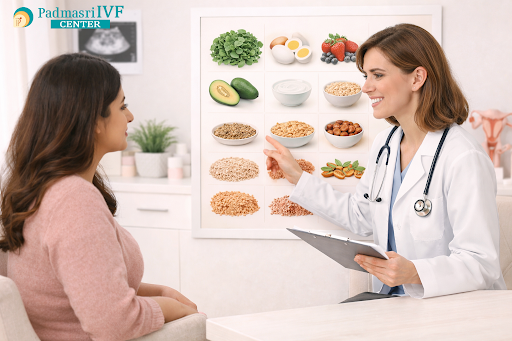
Examples of lower glycemic and fiber-rich foods include oats, brown rice in moderate portions, millets, whole fruits instead of juices, vegetables, lentils, beans, chickpeas, seeds, and whole grains. White bread, sweets, sugary drinks, bakery items, and highly refined snacks should be reduced because they may worsen insulin resistance and increase hunger later.
Fiber also supports digestion and gut health, which play a role in hormone balance. A healthy gut may help the body manage inflammation and estrogen metabolism more effectively. Women with PCOS often feel better when they include more vegetables, salads, soaked legumes, fruit in the right portions, and whole-food snacks. At padmasrihospitalsandivfcentre, women receive guidance that connects everyday diet choices with long-term fertility outcomes. This is one reason many families consider it the Best Fertility Clinic in Vizag for PCOS-focused fertility care.
Include Enough Protein in Every Meal
Protein is one of the most important nutrients in a PCOS fertility diet. It helps keep blood sugar more stable, supports satiety, reduces cravings, and plays a role in hormone production and tissue repair. Many women eat meals that are heavy in carbohydrates but low in protein, which can lead to faster hunger, energy dips, and less stable blood sugar levels.
Good protein sources include eggs, paneer, curd, milk if tolerated, chicken, fish, dal, sprouts, tofu, soya in moderation, peanuts, and lentils. Women who are vegetarian can still build a strong fertility diet by combining different plant protein sources across the day. The goal is not to eat excessive protein but to include some protein in each major meal and snack.
✔ Protein is especially important at breakfast. A breakfast based only on tea and biscuits or white bread may lead to cravings later in the day. A better option may be vegetable upma with curd, dosa with sambar, eggs with roti, moong chilla, or oats with nuts and seeds. Better meal quality in the morning can improve the rest of the day too.
✔ Protein-rich meals help reduce blood sugar fluctuations, support better fullness, and create a more stable nutritional environment that is helpful for women with PCOS trying to conceive.
✔ Including protein at breakfast, lunch, and dinner is often more effective than eating a large amount in only one meal because the body benefits from regular nutritional support throughout the day.
✔ Women with PCOS who add more quality protein to their meals often notice better control over cravings, improved energy, and a smoother eating pattern that supports fertility goals.
Choose Healthy Fats That Support Hormone Balance
Fats are often misunderstood, but healthy fats are essential for hormone production, reproductive health, and nutrient absorption. A fertility diet for PCOS should include healthy fats in moderate amounts, not avoid fats completely. The body needs fats to produce hormones and to absorb vitamins such as A, D, E, and K, which are important for overall health.
Helpful fat sources include nuts, seeds, avocado, olive oil, groundnut in moderation, sesame seeds, flaxseeds, chia seeds, and fatty fish where suitable. Omega-3 fats may be especially useful because they can help reduce inflammation and support general health. On the other hand, trans fats and heavily fried processed foods should be minimized because they may worsen inflammation and metabolic health.
Healthy fats also make meals more satisfying. A small amount of nuts with breakfast or seeds added to curd or smoothies can improve meal quality. The idea is moderation, not excess. Women with PCOS should not fear every source of fat, but they should choose better-quality sources more often.
Fill the Plate with Colorful Vegetables and Antioxidant Foods
Egg health and reproductive health are affected by oxidative stress, which means damage caused by unstable molecules in the body. Antioxidants help protect cells from this damage. Since PCOS may involve higher oxidative stress, antioxidant-rich foods are an important part of a fertility-friendly diet plan.
Colorful vegetables and fruits provide antioxidants, vitamins, and minerals that support overall reproductive health. Leafy greens, beetroot, carrots, tomatoes, bell peppers, berries, pomegranate, citrus fruits, and pumpkin can all be useful additions. These foods also contain fiber, which helps insulin control and digestion.
Women do not need expensive imported foods to eat well for fertility. Many local fruits and vegetables are highly nutritious. The key is variety. A colorful plate often means a wider range of nutrients. At padmasrihospitalsandivfcentre, women are encouraged to build practical meal plans using accessible foods while focusing on fertility support. This practical guidance is valuable for couples looking for the Best Fertility Clinic in Vizag.
✔ A diet rich in vegetables and antioxidant foods can help reduce oxidative stress, support cell health, and create better internal conditions for egg development and hormonal balance.
✔ Women trying to conceive should aim to include different colors of vegetables throughout the week because variety improves nutrient intake and supports broader reproductive health benefits.
✔ Seasonal and local produce can be just as effective as expensive specialty foods, especially when meals are prepared regularly and combined with an overall healthy diet pattern.
Do Not Ignore Iron, Folate, Vitamin D, and Other Key Nutrients
Micronutrients matter greatly in fertility. Women with PCOS may have nutritional gaps because of irregular eating habits, restricted diets, poor gut health, or long-term metabolic imbalance. Nutrients such as iron, folate, vitamin D, B vitamins, zinc, magnesium, and selenium all support different aspects of reproductive health. These nutrients are important for ovulation, hormone balance, egg development, and preparation for pregnancy.
Folate is especially important because it supports early fetal development and is often recommended before pregnancy. Iron is important for oxygen transport and general health. Vitamin D deficiency is common in many women, including those with PCOS, and may affect fertility and hormonal balance. Zinc and magnesium also play supportive roles in hormone function and metabolism.
Food should be the foundation, but sometimes supplements may be needed if a deficiency is identified. It is always better to use supplements under medical guidance rather than taking many products on your own. At padmasrihospitalsandivfcentre, fertility planning may include nutritional review and supplement support when necessary so that the body is better prepared for conception.
Manage Weight in a Healthy and Realistic Way
Not all women with PCOS are overweight, but for those who are, healthy weight management can support fertility improvement. Even a modest reduction in body weight can improve insulin sensitivity, help regulate periods, and support ovulation. This does not mean every woman with PCOS must become very thin. It means that if excess weight is part of the hormonal imbalance, gradual lifestyle changes can help the body respond better.
Healthy weight management should not be based on starvation or extreme restriction. It should come from better meal structure, fewer processed foods, regular movement, improved sleep, and a steady routine. Women who lose weight too quickly may struggle to maintain results and may also feel more stressed physically and emotionally.
Weight should be seen as one part of the fertility picture, not the only factor. Many women with PCOS feel blamed for their condition because of weight discussions. A better approach is supportive, respectful, and science-based. At padmasrihospitalsandivfcentre, women receive fertility guidance that looks at hormones, ovulation, lifestyle, and reproductive goals together. That balanced approach is why many consider it the Best Fertility Clinic in Vizag.
Plan Smart Snacks and Reduce Sugar Cravings
Cravings are very common in women with PCOS, especially when meals are unbalanced or blood sugar rises and falls quickly. Smart snacking can prevent overeating later and help women stay on track with a fertility-friendly diet. The goal is not to snack constantly but to choose nourishing options when hunger appears between meals.
Helpful snack ideas include fruit with nuts, boiled chana, sprouts, roasted makhana, curd with seeds, boiled eggs, vegetable sandwiches on whole grain bread, or homemade smoothies with protein and fiber. Sugary drinks, packaged juices, biscuits, chips, pastries, and sweets should be reduced because they often increase blood sugar and do not provide lasting fullness.
✔ Women with PCOS often do better when they prepare snacks in advance rather than waiting until they are extremely hungry. Planned eating reduces impulsive choices. It also improves consistency, which matters a lot when trying to improve fertility over time.
✔ Smart snacking helps prevent extreme hunger, improves daily energy balance, and reduces the chances of relying on sugary or highly processed foods that may worsen insulin resistance.
✔ Snacks that combine protein, fiber, and healthy fats are generally more useful for women with PCOS because they support fullness and help maintain more stable blood sugar levels.
✔ Small changes in snack quality can make a big difference over weeks and months, especially when the goal is better hormone balance and improved fertility support.
Stay Hydrated and Be Careful with Sugary Drinks
Hydration is often overlooked in fertility care. Drinking enough water supports digestion, circulation, metabolism, and general health. While water alone will not solve PCOS, poor hydration can worsen fatigue, digestive discomfort, and low energy, making it harder to stay active and follow a healthy routine.
Sugary drinks deserve special attention because they can increase blood sugar quickly and add extra calories without improving fullness. Soft drinks, packaged juices, sweetened coffee beverages, energy drinks, and excess sweet tea can make insulin resistance worse. Replacing them with water, buttermilk, lemon water without too much sugar, or unsweetened herbal drinks can be a useful step.
Women trying to conceive should build small daily habits that support the bigger goal. Something as simple as carrying a water bottle and reducing sweet beverages can contribute to a better metabolic environment over time.
Time Your Meals Well and Avoid Skipping Breakfast
Meal timing can influence energy levels, cravings, and blood sugar control. Many women with PCOS skip breakfast, eat lightly during the day, and then overeat later in the evening. This pattern can worsen energy crashes and make insulin control harder. A more regular meal schedule may help the body maintain better balance.
Breakfast should be nourishing and should ideally include protein, fiber, and some healthy fat. Lunch and dinner should also be structured rather than random. Long gaps between meals often increase hunger and can lead to poor choices later. Women do not need to eat every hour, but they usually benefit from a more regular rhythm.
When food timing becomes more stable, the body may respond better in many ways. Better energy, fewer cravings, and more consistent meal quality all support hormone health. That is why diet planning for PCOS is not only about food type but also about food timing.
Combine Diet with Exercise, Sleep, and Stress Control
Diet alone is powerful, but fertility improvement is strongest when food changes are combined with other supportive habits. Exercise improves insulin sensitivity and circulation. Good sleep supports hormone regulation and appetite control. Stress management reduces cortisol overload and may help women feel more balanced during the fertility journey.
This combination matters because PCOS affects the whole system, not just one organ. A woman may eat well but still struggle if she sleeps poorly, has no movement, and feels constant stress. On the other hand, when diet, movement, sleep, and emotional care come together, the body often responds more positively.
At padmasrihospitalsandivfcentre, women are encouraged to look at fertility as a whole-body journey. This is especially helpful for those seeking the Best Fertility Clinic in Vizag, because real fertility care often requires more than medicines alone. A complete support system can improve both confidence and outcomes.
A Sample PCOS Fertility Diet Pattern for Daily Use
A sample PCOS fertility day may begin with warm water and a balanced breakfast such as vegetable oats with boiled eggs, moong chilla with curd, or idli with sambar and a protein-rich side. Mid-morning may include fruit with nuts or buttermilk. Lunch can include dal, vegetables, curd, salad, and a moderate portion of rice or roti. Evening snack can be sprouts, roasted chana, or a boiled egg. Dinner should be balanced but not too heavy, such as roti with paneer curry and vegetables or grilled fish with vegetables and millet.
This is only a general pattern and not a strict medical prescription. Individual needs differ based on body weight, activity level, food preference, digestive issues, and fertility treatment stage. Women undergoing IUI or IVF may also need more specific dietary guidance depending on their situation.
The most important point is consistency. A fertility diet does not need to be perfect every day. It needs to be supportive most of the time. Repeating healthy patterns is more helpful than following a strict plan for three days and then giving up.
When to Seek Expert Help for PCOS Fertility
Diet is powerful, but it is not always enough on its own. If periods remain very irregular, ovulation does not happen, or pregnancy is not occurring after several months of trying, it is important to seek expert help. Fertility challenges may involve not only PCOS but also thyroid issues, tubal problems, male-factor infertility, age-related factors, or other hormonal concerns.
A fertility specialist can assess hormone levels, ovulation, ovarian reserve, ultrasound findings, and the overall fertility profile of both partners. This helps avoid guesswork and allows women to move forward with a clear plan. Nutrition remains important, but medical treatment may also be necessary depending on the case.
At padmasrihospitalsandivfcentre, fertility care is personalized to each woman’s needs. Women looking for the Best Fertility Clinic in Vizag often need a center that understands both lifestyle-based care and advanced fertility treatment. The right guidance can help couples move from confusion to clarity and from delay to action. For many families, padmasrihospitalsandivfcentre stands out as the Best Fertility Clinic in Vizag because it combines compassionate support with structured fertility solutions.
Why Food Choices Can Improve Egg Health and Pregnancy Readiness
A fertility diet is not only about getting pregnant. It is also about preparing the body for a healthier pregnancy. Better nutrition supports egg development, improves the uterine environment, helps reduce inflammation, and provides the body with the building blocks needed for conception and early fetal growth. Women with PCOS benefit when they start this preparation before pregnancy happens.
Better food choices may also improve response to treatment. Women undergoing ovulation induction, IUI, or IVF may still benefit from a stable and nourishing diet. The body handles treatment better when nutrition, hydration, and lifestyle are all supportive. This is why food should be seen as a foundation, not as an afterthought.
For couples searching for the Best Fertility Clinic in Vizag, it is valuable to choose a place that recognizes the role of diet in fertility success. At padmasrihospitalsandivfcentre, this broader view of reproductive care helps women feel informed, supported, and better prepared for the journey ahead.
Conclusion
A PCOS fertility diet plan for women trying to conceive should be practical, balanced, and rooted in long-term health. The goal is not just weight control. The real aim is to support hormone balance, improve insulin sensitivity, reduce inflammation, encourage ovulation, and prepare the body for pregnancy. Small daily choices in food can create powerful changes over time.
Women with PCOS should focus on balanced meals, enough protein, high-fiber foods, healthy fats, antioxidant-rich produce, good hydration, and regular eating patterns. They should reduce excess sugar, processed snacks, and unhealthy fats while also caring for sleep, stress, and physical activity. These changes can support both natural fertility and medical treatment outcomes.
At padmasrihospitalsandivfcentre, women receive guidance that connects fertility treatment with practical daily care. For those looking for the Best Fertility Clinic in Vizag, choosing a center that understands the relationship between PCOS, diet, hormones, and conception can make a meaningful difference. With the right support, the Best Fertility Clinic in Vizag can help women move forward with better knowledge, healthier habits, and stronger hope.